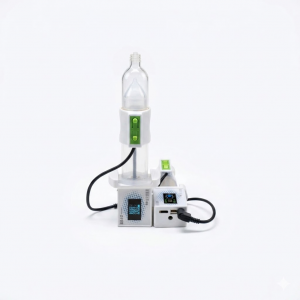
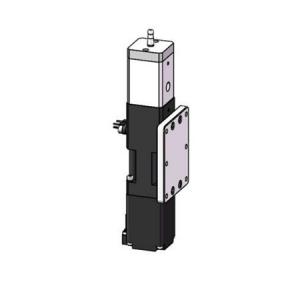
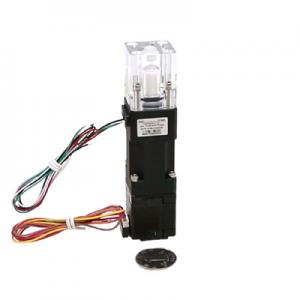
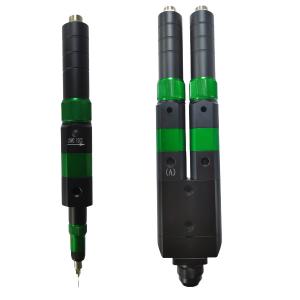
AB bicomponent handheld mixing and dispensing valve
Name: Handheld Double Liquid Dispensing Valve
Model: MY-126AB
Form: suck back
Body material: stainless steel + aluminum alloy
Operating viscosity: 1-100000cps
Spit glue volume: 0.5ml
Feeding port size: 1/8"npt(f)
Working pressure: 4-7kgf/cm
Working voltage: DC 24V
Speed: 1300rpm
Feeding pressure: <10kg
Weight: 1438g
Glue ratio: 1:1-3:1
Applicable fluid: AB silica gel, AB crystal glue, AB transparent glue, epoxy resin and other two-component glue

The MY-126AB is a high-performance choice for bi-component materials, particularly for applications requiring the active blending of two fluids. Based on the technical specifications and its common industrial application, here is the information you need for your robotic integration.
1. Does it require a dedicated controller?
Yes. While the MY-126AB is the "business end" of the system, it is not a standalone "plug-and-play" device for a robot without external support. To operate it, you will need:
A Dispensing Controller: This box regulates the compressed air (pneumatics) that opens and closes the valve and controls the DC 24V power sent to the electric mixing motor.
PLC/Robot Interface: Since you are mounting this on a robot, your controller must have an I/O interface (usually a 9-pin or similar port) to allow the robot to trigger the "start/stop" signal.
Motor Speed Controller: The 1300rpm motor requires a driver to maintain consistent rotation of the internal mixing rod. This is often integrated into the specialized "Double-Liquid Controllers."
2. Can it achieve a 6 mm glue dot?
Yes, but with caveats. The valve specifies a minimum "Spit glue volume" of 0.5ml.
A 6mm diameter dot is relatively small for a high-flow mixing valve. Whether you can achieve this repeatably depends on the viscosity of your glue and the timing precision of your robot's trigger signal.
The "Suck-back" (Anti-drip) feature of the MY-126AB is critical here; it will pull the glue back slightly after the shot to prevent stringing, which is essential for maintaining a clean 6mm dot.
3. Recommended Configuration for Robotics
To move forward with a repeatable robotic production line, you will need the following "kit":
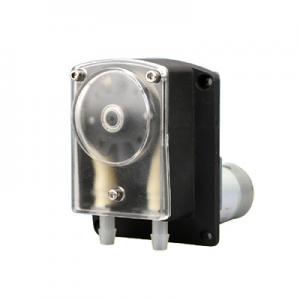
Pressure Tanks (x2): You need two separate pressurized reservoirs (one for Part A, one for Part B) to feed the glue into the 1/8" NPT inlet ports of the valve.
Double-Liquid Controller: Look for a controller specifically designed for "Electric Mixing Valves." It will handle the air pressure timing and the 24V motor drive simultaneously.
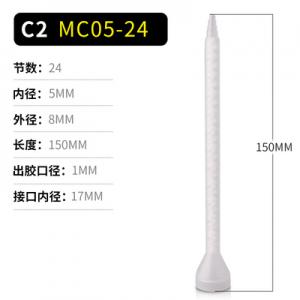
Static/Dynamic Mixing Tips: You will need a supply of disposable mixing nozzles that attach to the front of the MY-126AB.
Air Filter/Regulator: To ensure the 4-7kgf/cm working pressure is clean and consistent (fluctuations in air pressure will change your dot size).
Technical Summary for your Engineering Team:
Motor: DC 24V / 1300 RPM (Requires 24V DC power supply/trigger).
Pneumatics: 4-7kgf/cm (approx. 60-100 PSI) to actuate the valve.
Mounting: The unit weighs 1438g (approx. 3.2 lbs). Ensure your robot's payload capacity can handle the weight of the valve plus the weight of the glue-filled hoses.
Ratio: It supports 1:1 to 3:1 ratios. If your glue ratio is outside this (e.g., 10:1), you may need a different internal mixing core.
Recommendation: Before purchasing, confirm the viscosity (cps) of your specific glue. This valve is rated up to 100,000cps; if your glue is higher (like a thick paste), you may need high-pressure pumps instead of simple pressure tanks.