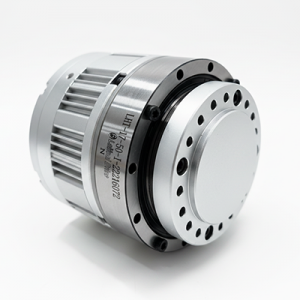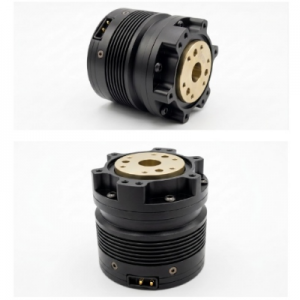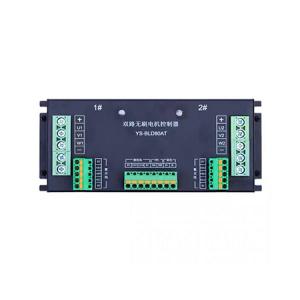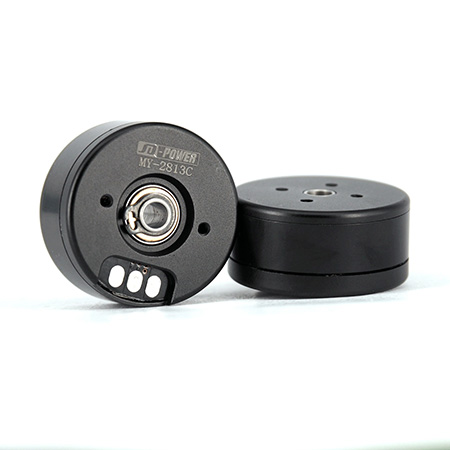
Brushless Gimbal Motor
Gimal Motor is designed and ideal for Gopro stabilizer
Approximate payload weight range: 0~50g, handled gimbal can not exceed this weight, aerial photography gimbal can exceed approximately 30% percent weight
Utilize high quality material and optimized production process ensure excellent performance and consistency
How is a brushless gimbal motor different from a regular brushless motor?
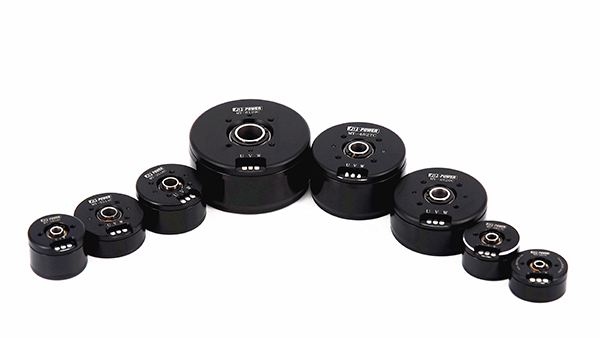
"They are both low and high speed at the same time. Low speed, in that they never actually complete a full 360 rotation so you wouldn't normally think of measuring their speed in rpm, but high speed in that they need to respond instantly to sometimes very rapid changes in direction as the aircraft may be getting shook by vibrations and turbulence. That means they're meant to be light and fast, not powerful and slow. These motors are not meant to carry any kind of continuous load."
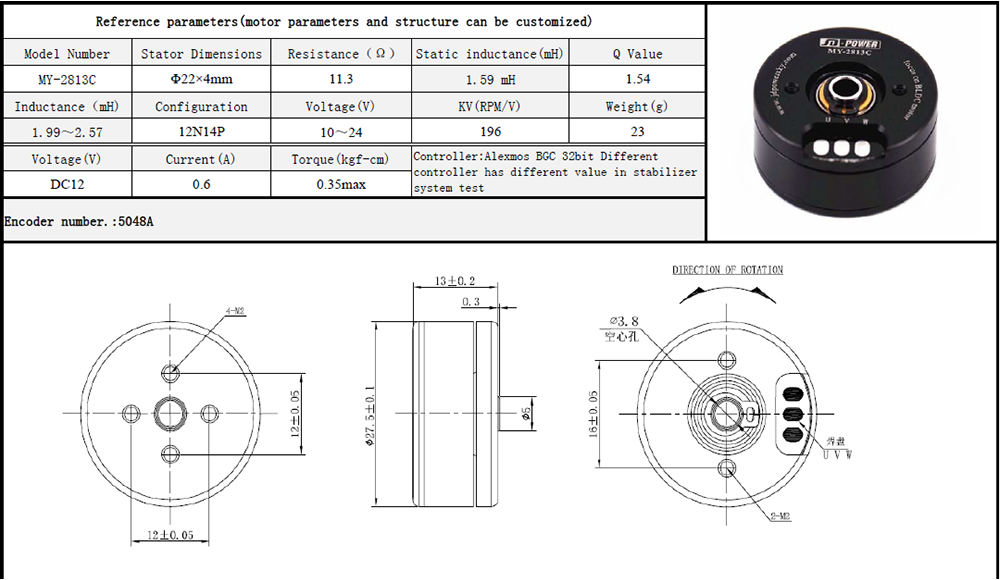
The PM3500 and PM4310 (often prefixed as GB3500 / GB4310 or QD4310) are widely used framing standards for brushless gimbal and servo motors used in robotics, camera gimbals, and precision motion control.
PM3500 Motor
Characteristics: A compact, flat brushless motor designed for low-torque, highly space-constrained applications.
Target Applications: Handheld smartphone gimbals, lightweight GoPro/action-camera stabilizers, small pan-tilt sensor platforms, and miniature robotic pan axes.
Key Strengths: Very light weight, low power consumption, minimal rotational inertia.
PM4310 / QD4310 Integrated Servo
Characteristics: A larger, higher-torque motor platform frequently used as an all-in-one smart servo.
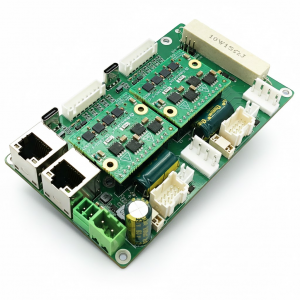
Models like the QDrive QD4310 combine the motor, a 15-bit magnetic encoder (e.g., MT6826), and a Field-Oriented Control (FOC) driver board inside a single package.
Target Applications: Robotic arm joints, mobile robot wheel drives, DSLR/mirrorless camera gimbals, and university/competition robotics platforms.
Key Strengths: Higher holding torque, large central hollow shaft for routing power/signal lines, direct multi-bus control (CAN, USB, UART, PWM), and onboard FOC closed-loop control.