Integrated Puller Cutter Combination vs. Standalone Puller and Cutter: Engineering, Operational, and ROI Guide
In continuous extrusion lines for tubing, pipes, medical catheters, and technical profiles, the interface between haul-off traction and cut-to-length processing is critical. Precision downstream sizing requires continuous linear tension through the calibration tank, followed immediately by clean, burr-free, and repeatable length cuts.
When configuring downstream equipment, extrusion engineers face a fundamental architecture decision: an integrated combination puller-cutter (combining both functions on a shared chassis) or discrete, standalone puller and cutter machines.
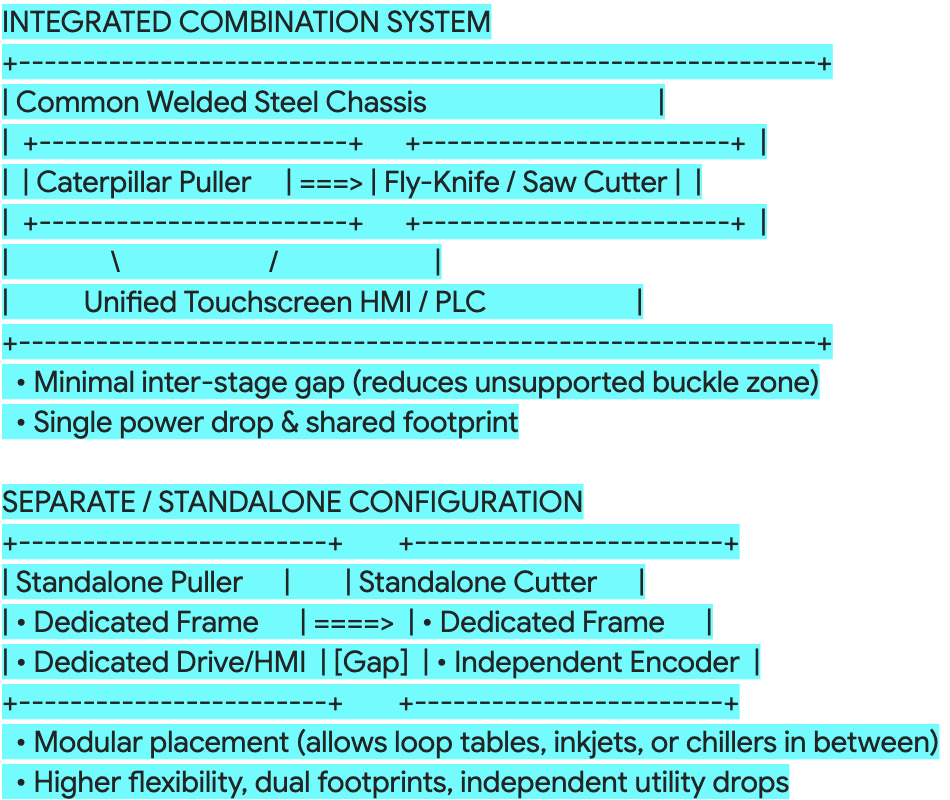
The Case for the Integrated Combination Puller-Cutter
An integrated combination unit (such as caterpillar-belt haul-offs mated directly to servo-driven rotary fly-knife cutters) is the industry standard for small-to-medium profiles, flexible tubing, and medical-grade polymers.
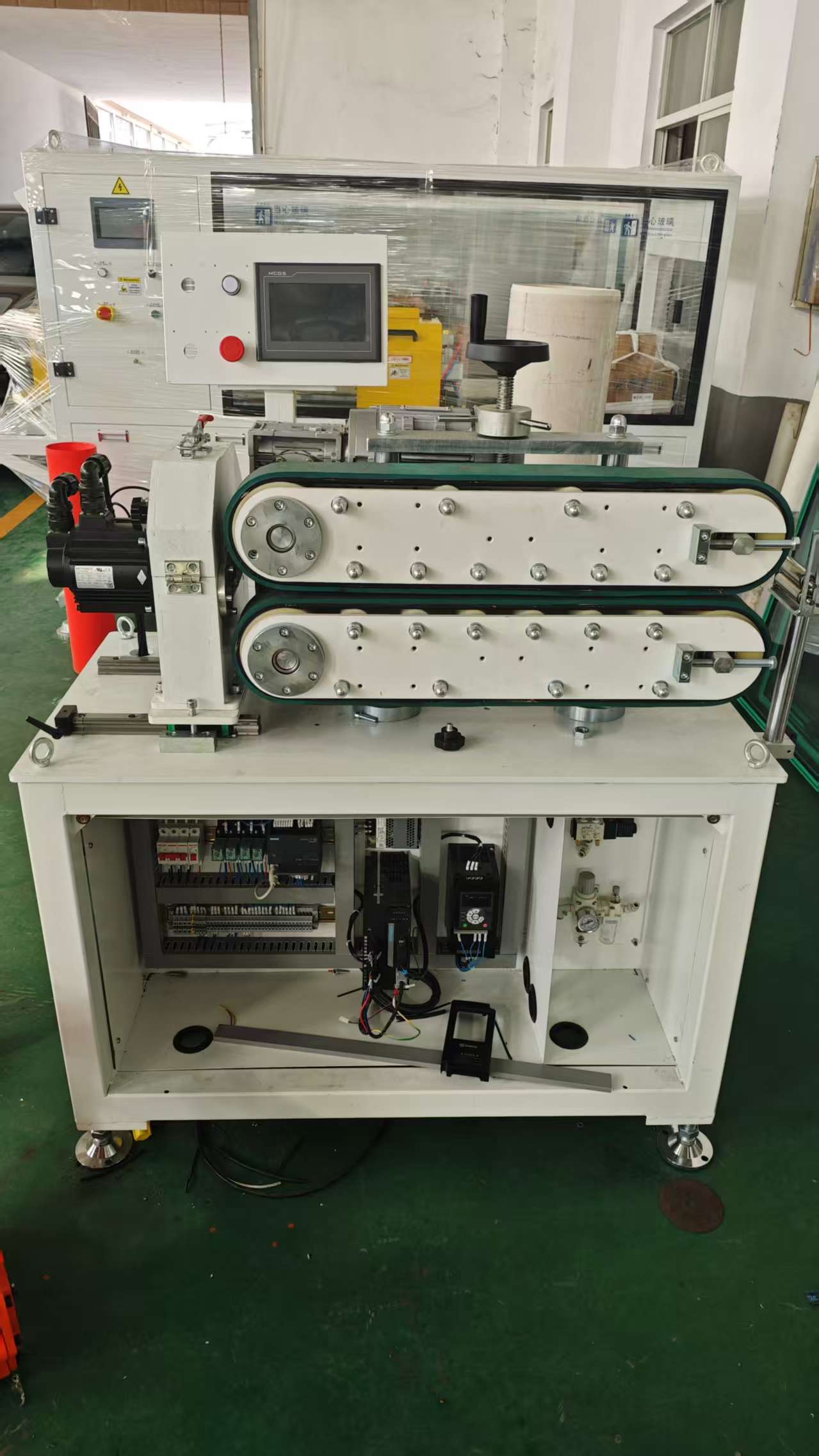
Key Advantages
Elimination of "Snake Effect" and Material Buckling:
When cutting flexible, elastomeric, or thin-walled products (e.g., silicone, TPU, soft PVC, TPE), any unsupported distance between the puller discharge and the cutter guide bushing creates a zone of vulnerability. In standalone systems, the product can wander, sag, or buckle as the knife enters the cut. In a combination unit, the puller discharge belt sits immediately against the cutter entry guide bushing, ensuring rigid lateral containment.
Turnkey Line Alignment:
Because both modules share a single precision-machined bed, the puller belt center plane and the cutter bushing bore are permanently co-axial. This eliminates angular misalignment and uneven blade wear caused by mismatched site leveling.
Unified Recipe Management:
A single PLC coordinates both mechanisms. When switching product runs (e.g., from rigid HDPE to brittle HIPS), the operator loads a single recipe that sets pulling speed, belt clamping pressure, servo acceleration ramps, cut-length targets, and batch counts simultaneously.
When to Choose a Combination Unit:
Extrudate OD under 50 mm (2.0 in): Especially flexible, thin-walled, or micro-bore tubing.
Space-Constrained Plants: Cleanrooms, lab extrusion setups, or compact production cells.
High-Speed On-Demand Cutting: Applications requiring fast cut cycles where knife timing must tie directly to the puller drive without encoder transmission lag.
The Case for Separate Standalone Puller and Cutter Units
While combination units offer mechanical cohesion, standalone machines remain the preferred choice for heavy industrial extrusion, large-diameter pipe, and processes requiring specialized intermediate treatment.
Key Advantages
Freedom to Insert Mid-Line Processing:
Certain applications require operations that must take place after the extrudate is under continuous tension, but before it is sliced into discreet lengths. Standalone configurations allow you to position equipment between the puller and the cutter:
Continuous inkjet or laser date/lot coding stations (allowing adequate ink-dry runout).
In-line laser micrometers, wall-thickness ultrasonic gauges, or high-voltage spark testers.
Secondary annealing tunnels or tertiary air-cooling channels.
Free-loop accumulation tables for intermittent or travelling table saws.
Process Decoupling for Heavy Shock Loads:
When cutting heavy, thick-walled materials (such as Schedule 40/80 PVC, thick HDPE conduit, or reinforced industrial profiles), cutting generates significant mechanical shock and vibration—whether through high-torque guillotine blades or reciprocating circular saws. In a combination unit, these shock waves can transmit through the shared frame into the caterpillar belts, causing micro-slippage and visible chatter marks on the profile surface. Separating the cutter onto its own isolated foundation protects the puller from impact vibration.
Modular Maintenance & Long-Term Scalability:
If a production facility runs profiles that occasionally switch between rotary shear cutting, planetary sawing, and coil winding, a standalone puller can remain anchored while the downstream station is changed out or bypassed for a winder.
When to Choose Separate Machines:
Rigid Pipe / Heavy Profiles (> 50–75 mm OD): Where cutting forces generate structural shock or require travelling/planetary saws.
Downstream Marking / Inspection Needs: Where inkjets, chillers, or flaw detectors require physical space between pulling and cutting.
Multi-Purpose Lines: Facilities that frequently switch between cut-to-length parts and continuous reel winding.
Strategic Selection Framework
To determine the right configuration for your project, evaluate these four baseline criteria:
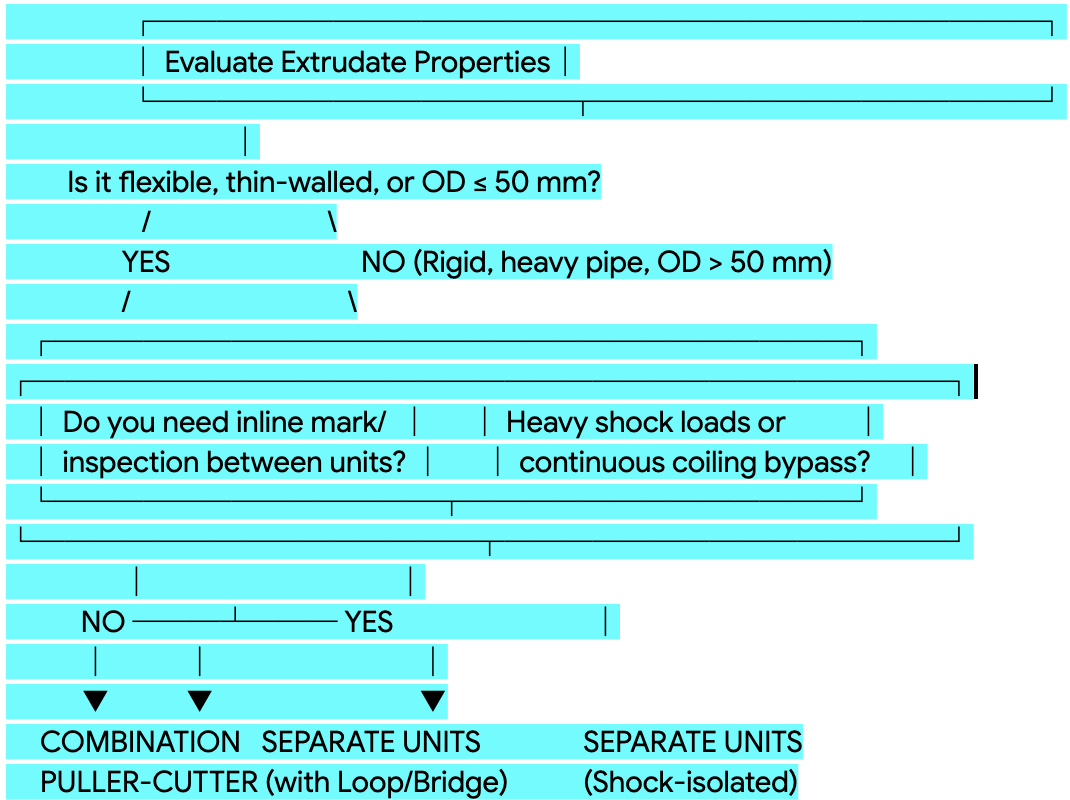
Product Rigidity: If the extrudate lacks column strength (soft elastomer, medical cannula, flexible profile), an integrated combination puller-cutter is virtually mandatory to prevent downstream buckling.
Vibration Severity: If the cut mechanism produces high recoil (e.g., pneumatic guillotine, heavy chip-saw on thick polymer), select separate units to isolate pulling tension from cut shock.
Line Footprint: If floor space is at a premium, an integrated system saves 1.5 to 2.5 meters of linear line length.
Lifecycle Flexibility: If the line will run the same dedicated product geometry for years, the integrated unit offers superior speed, alignment, and lower upfront investment. If your contract shop must frequently retool between cutting, sawing, and spooling, modular separate machines offer greater versatility.
Recent post:
- Upgrade Your Automation: Lightweight Stepper Motorized Linear Actuators from RobotDigg
- Understanding Press Types: Pneumatic, Hydraulic, and Servo Drive Configurations
- Bridging the Hardware Gap: How Open-Source Motion Platforms Are Reshaping Simulation and Prototyping
- Engineering Cost Breakdown: How Pitch and Groove Depth Drive Reversing
- Integrated Puller Cutter Combination vs. Standalone Puller and Cutter: Engineering, Operational, and ROI Guide