Revolutionizing Biochip Production: The Seamless Integration of CO2 Foamed PE Cores and Outer Envelopment
In the rapidly evolving landscape of biotechnology, the precision manufacturing of biochips and high-efficiency filtration media has become a cornerstone for diagnostic and environmental progress. RobotDigg is now highlighting a sophisticated production line tailored for a unique architectural design: the Supercritical CO2 Foamed PE Core with a protective Outer Envelopment.
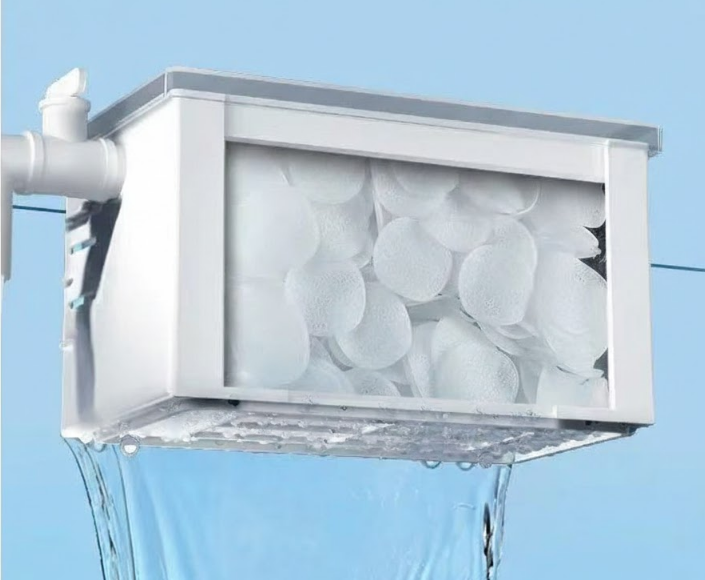
This "Bio-chip Filter" or "Biological Potato Chip" structure leverages advanced material science to provide unparalleled surface area for microbial growth and fluid interaction.
1. The Core Technology: Supercritical CO2 Foaming
The heart of this production line starts with the creation of the internal foam rod. Unlike traditional chemical foaming, which can leave toxic residues unsuitable for sensitive biological applications, RobotDigg’s solution utilizes Supercritical CO2 (scCO2).
Purity: scCO2 acts as a physical blowing agent, leaving zero chemical traces in the Polyethylene (PE) matrix.
Micro-cellular Structure: The process creates high-density, uniform micropores, maximizing the Specific Surface Area essential for biofilm attachment or reagent loading.
Eco-Friendly: The process is sustainable, recycling CO2 and minimizing volatile organic compound (VOC) emissions.
2. The Multi-Stage Production Process
The RobotDigg production line is designed for a continuous, "Core-then-Envelope" workflow to ensure structural integrity:
Process Step Action Objective
Step 1: Extrusion & Foaming PE resin is melted and infused with scCO2 under high pressure. Create the porous, sponge-like internal "Core."
Step 2: Core Shaping The foamed material is pulled through a precision sizing die. Ensure a consistent diameter for the internal rod.
Step 3: Outer Envelopment A secondary "Skin Layer" of dense PE or medical-grade polymer is co-extruded or heat-shrunk over the core. Provide mechanical strength and prevent lateral fluid leakage (forced axial flow).
Step 4: Precision Slicing High-speed rotary blades cut the long-rod composite into "chips." Achieve the "Bio-Potato Chip" form factor with clean, open-pore cross-sections.
3. Key Features of the RobotDigg Production Line
High Consistency: Automated pressure feedback loops ensure the CO2 infusion remains constant, preventing "pulsing" and maintaining uniform pore sizes.
Modular Design: The envelopment unit can be adjusted to apply different wall thicknesses or materials (e.g., color-coded skins for different filter grades).
Bio-Compatibility: All contact parts in the extrusion path are optimized to prevent contamination, ensuring the final chip is ready for medical or laboratory use.
4. Application Potential
MBBR Water Treatment: These chips serve as high-performance carriers in Moving Bed Biofilm Reactors.
Point-of-Care Diagnostics: The porous core can be functionalized with specific antibodies or DNA probes for rapid testing.
Tissue Engineering: The scaffold-like structure provides an ideal environment for 3D cell culture.
Why Choose This Method?
The "Core + Envelopment" method solves a major pain point in bio-media manufacturing: Structural Fragility. By wrapping the delicate foamed core in a dense outer skin, the chips can withstand high-pressure water flow or industrial mixing without crumbling, all while maintaining the massive internal surface area required for biological efficiency.
Recent post:
- The Death of the Battery: Why Mechanical n Inductive Encoders are the New Standard for Stepper and Servo Motors
- Why Tank-Style Chillers Aren't Always Best for Extrusion Lines
- Revolutionizing Biochip Production: The Seamless Integration of CO2 Foamed PE Cores and Outer Envelopment
- Why Fly-knife Rotary Cutters Use Utility Blades as Cutting Tools
- Deep Dive: Specialized Components of the CO2 Injection System