Beyond the Hype: Why Low-Voltage Permanent Magnet Servos and FOC are the
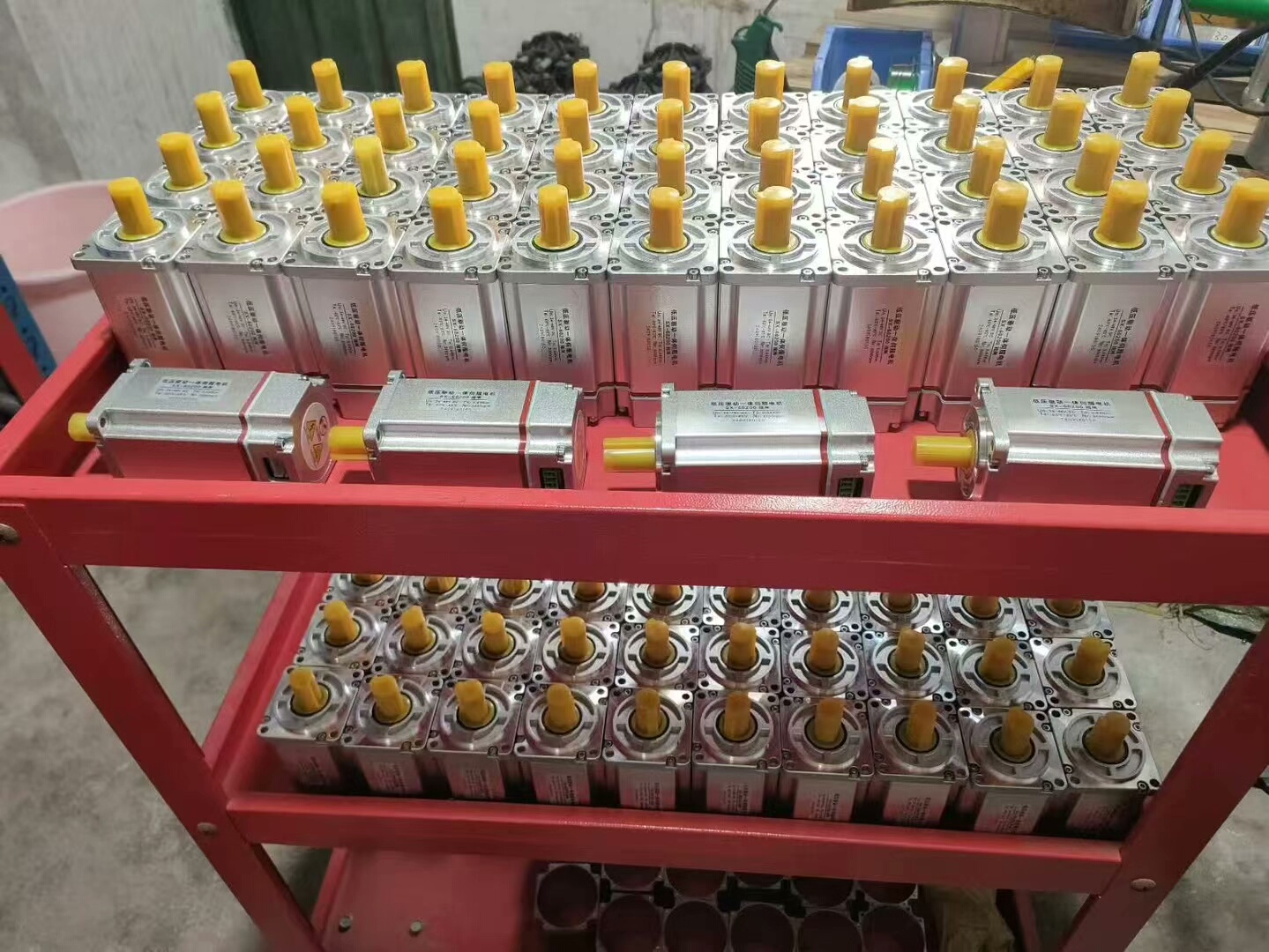
If you’ve been scrolling through the RobotDigg inventory, you’ve likely seen a growing section dedicated to Low-Voltage BLDC Servos. In the past, "Servo" meant expensive 220V AC industrial beasts, while "Brushless" meant high-speed drone motors that were hard to control at low speeds.
Today, the lines have blurred. The combination of Low-Voltage Permanent Magnet (PM) motors and FOC (Field Oriented Control) has created a "sweet spot" for robotics. Here’s why this tech is a game-changer for your next AGV, robotic arm, or CNC project.
1. The Nomenclature Trap: PM vs. Brushless
First, let's clear the air. On a technical level, all modern brushless servos are permanent magnet motors. The difference usually lies in the Back-EMF waveform:
BLDC (Brushless DC): Designed for "Trapezoidal" control. They are great for speed but can "cog" or vibrate at very low RPMs.
PMSM (Permanent Magnet Synchronous Motor): Designed for "Sinusoidal" control. These are the true "industrial-grade" servos that stay smooth even at 1 RPM.
At RobotDigg, many of our integrated servos use PMSM architecture because it allows for the highest level of precision required in 3D printing and robotic joints.
2. Why "Low Voltage" (24V-48V) is Winning
While factory floors run on 380V, the world of mobile and desktop robotics lives in the 24V to 48V DC range. There are three technical reasons for this shift:
A. Safety and Compliance
Working with 48V is inherently safer for the developer. It allows you to build and test "open-frame" robots without the lethal risks of high-voltage AC. It also simplifies international shipping and certification.
B. Battery Compatibility
For AGVs (Automated Guided Vehicles) and AMR (Autonomous Mobile Robots), the power source is a battery. Using a low-voltage servo eliminates the need for a bulky, inefficient DC-to-AC inverter. You get a direct, high-efficiency power path from your LiFePO4 or Lithium-ion pack to the motor driver.
C. Compact Driver Integration
Low-voltage MOSFETs are smaller and generate less heat than high-voltage IGBTs. This allows us to integrate the driver directly onto the back of the motor. These "Integrated Servos" save massive amounts of cabinet space and reduce EMI (electromagnetic interference) by shortening the phase wires.
3. FOC: The Brains of the Operation
You might have heard of FOC (Field Oriented Control). If you are using a brushless motor without FOC, you are leaving 30% of your performance on the table.
FOC works by measuring the current in the motor phases and mathematically "mapping" it to the rotor's magnetic field. It breaks the current into two vectors:
Id (Flux): Which we usually keep at zero to prevent wasting energy as heat.
Iq (Torque): Which we maximize to give you instant, punchy response.
Why does this matter for your build?
Silence: FOC eliminates the high-pitched "PWM whine" common in cheaper drivers.
Torque at Zero Speed: FOC allows a robot arm to hold a heavy load perfectly still without jittering.
Efficiency: Your batteries will last longer because the motor only draws the exact current needed to maintain the position.
4. Application Spotlight: When to Choose What?
Application Recommended Motor Key Reason
AGV / Mobile Base 48V Integrated BLDC Servo Battery-ready, high torque for inclines.
Robotic Arm Joint Low-Voltage PMSM + Harmonic Drive Zero-speed smoothness, compact size.
Desktop CNC Spindle High-speed BLDC (Non-Servo) Focus on raw RPM over position control.
Pick & Place Z-Axis NEMA 17/23 Low-Voltage Servo High acceleration and precise "End of Travel" sensing.
Final Thoughts
Whether you are upgrading a 3D printer or building a fleet of delivery robots, the shift toward Low-Voltage PM Servos is clear. They offer the safety of DC, the precision of AC Industrial Servos, and—thanks to FOC—the efficiency required for the next generation of smart machines.
Ready to spec out your project? Check out our latest Low Voltage Integrated Servo series and let us know if you need help calculating the gear reduction for your specific torque requirements!
Recent post:
- Professional Guide: Maximizing Performance of Miniature Linear Rails (Beyond the Myths)
- The Lab-Scale Breakthrough: RobotDigg’s Desktop Wire Coating Line for PEEK & Fluoropolymers
- Industrial-Grade LFAM: Mastering Glass Fiber and Carbon Fiber with RobotDigg Pellet Extruders
- Revolutionizing DIY Pick-and-Place: A Deep Dive into the Juki Nozzle System and Nozzle Adapters
- Galloping into 2026: Happy Year of the Fire Horse!