Mastering Level Wind Screws: How to Select the Ideal Materials, Surface Treatments, and Pawl Pairings for Peak Performance
In precision linear motion and automated spooling systems, few components are as elegantly functional—or as frictionally demanding—as the reversing screw (commonly known as a level wind screw or diamond screw).
By utilizing crisscrossing helical grooves and a swiveling follower, diamond screws convert continuous unidirectional rotation into smooth, reciprocating linear motion without needing to reverse the drive motor.
However, because the follower (or pawl) must continuously slide through deep intersections and instantly change direction at turnaround ends, level wind assemblies face severe mechanical stress, edge loading, and surface wear. Choosing the wrong combination of materials or surface treatments can lead to premature binding, galling, and system failure.
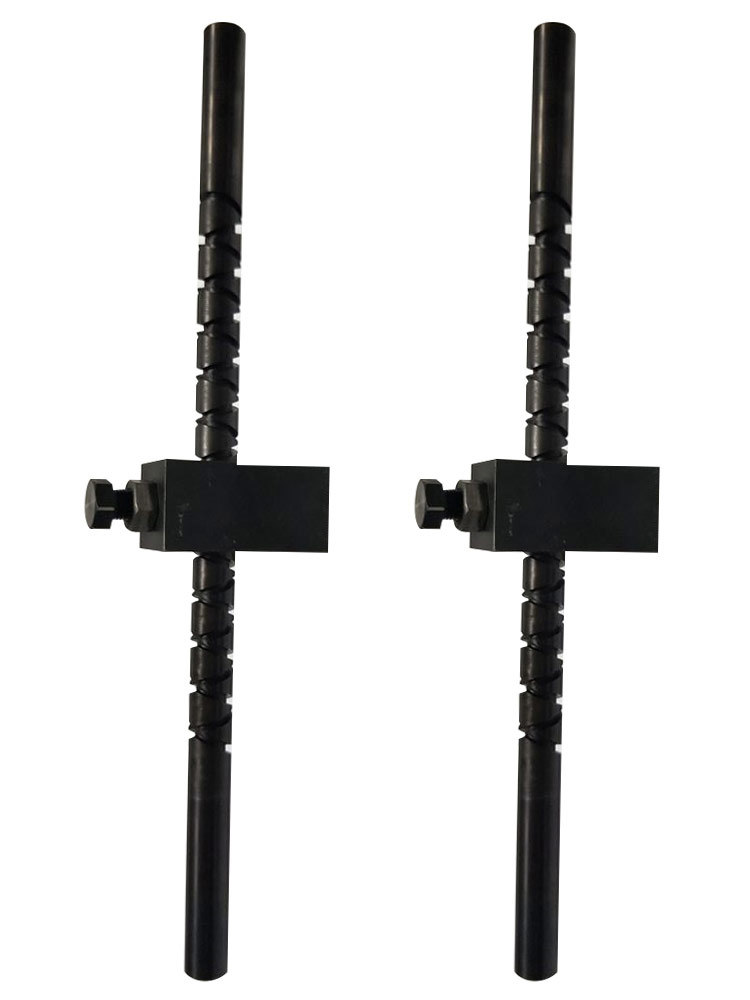
The Golden Rule: Design the Pawl to Be Sacrificial
Before selecting coatings or hardness profiles, every engineer must adhere to the foundational rule of reciprocating screw design: Never make the screw and the pawl from identical alloys with identical surface hardness.
The Screw is the Capital Investment: Diamond screws are long, highly intricate to machine, and expensive to replace.
The Pawl is the Wear Component: The pawl is small, easy to manufacture, and quick to service.
To protect your system, the diamond screw shaft should always be treated to be harder and more wear-resistant than the pawl. When wear eventually occurs under heavy duty cycles, it will happen predictably on the replaceable pawl rather than scoring the screw's complex grooves.
High-Performance Options for the Pawl / Traveller
The pawl's boat-shaped guide tab must pivot smoothly inside the groove crossovers without catching on the intersection corners. Depending on your operational speeds, loads, and lubrication setup, three primary approaches excel:
Option A: DLC (Diamond-Like Carbon) PVD Coating on Tool Steel
Best For: High-speed, high-precision linear motion with minimal or dry lubrication.
Why It Works: Applying a thin (1–3 micron) DLC coating via Physical Vapor Deposition (PVD) onto a hardened tool steel pawl yields extreme hardness (HV 2000+) and an exceptionally low friction coefficient (~0.1).
Key Advantage: DLC prevents material transfer, surface scoring, and galling, allowing the pawl to swivel instantly at turnaround points without drag.
Option B: QPQ Nitrocarburized Alloy Steel
Best For: General automation and cost-effective durability.
Why It Works: Treating steel pawls (e.g., 4140) with QPQ creates a smooth, slick surface layer that resists adhesive wear while pairing safely against nitrided or chrome-plated screws.
Option C: High-Strength Bronze (Ampco / Aluminum Bronze)
Best For: Heavy-load industrial winches and continuous wet-lubrication setups.
Why It Works: Machining pawls from specialized aluminum bronze (such as Ampco 18 or 21) relies on material dissimilarity rather than hard coatings. Bronze is naturally lubricious, virtually immune to galling against steel, and guarantees that the pawl will wear down smoothly without ever harming the main shaft.
Recent post:
- Decoding the Desktop Label: 4 Types of Compact Plastic Machinery Explained
- Flatness Matters: Why Borosilicate and Carborundum Glass Remain the Gold Standard for 3D Printer Heatbeds
- Choosing the Right Industrial Extrusion and Tube Cutter: High-Speed Rotary Fly-Knife vs. Automatic Desktop Cutters
- Desktop R&D: Creating Standard Test Specimens with RobotDigg’s Benchtop Ecosystem
- Overcoming the Desktop Bottleneck: Why Engineering Projects are Shifting to Direct Pellet Extrusion