Mastering Precision: Choosing the Right Controller and Feeder for Your Automation Pilot
When transitioning from a concept to a functional automated assembly line, the "how" of part movement is just as important as the "what." For engineers and makers using RobotDigg components, the heartbeat of the system is the vibratory feeder.
However, a common hurdle in the pilot testing phase is deciding how to control that vibration and which mechanical structure—Linear or Rotary—is best for the job. Here is everything you need to know to optimize your setup for speed, noise, and precision.
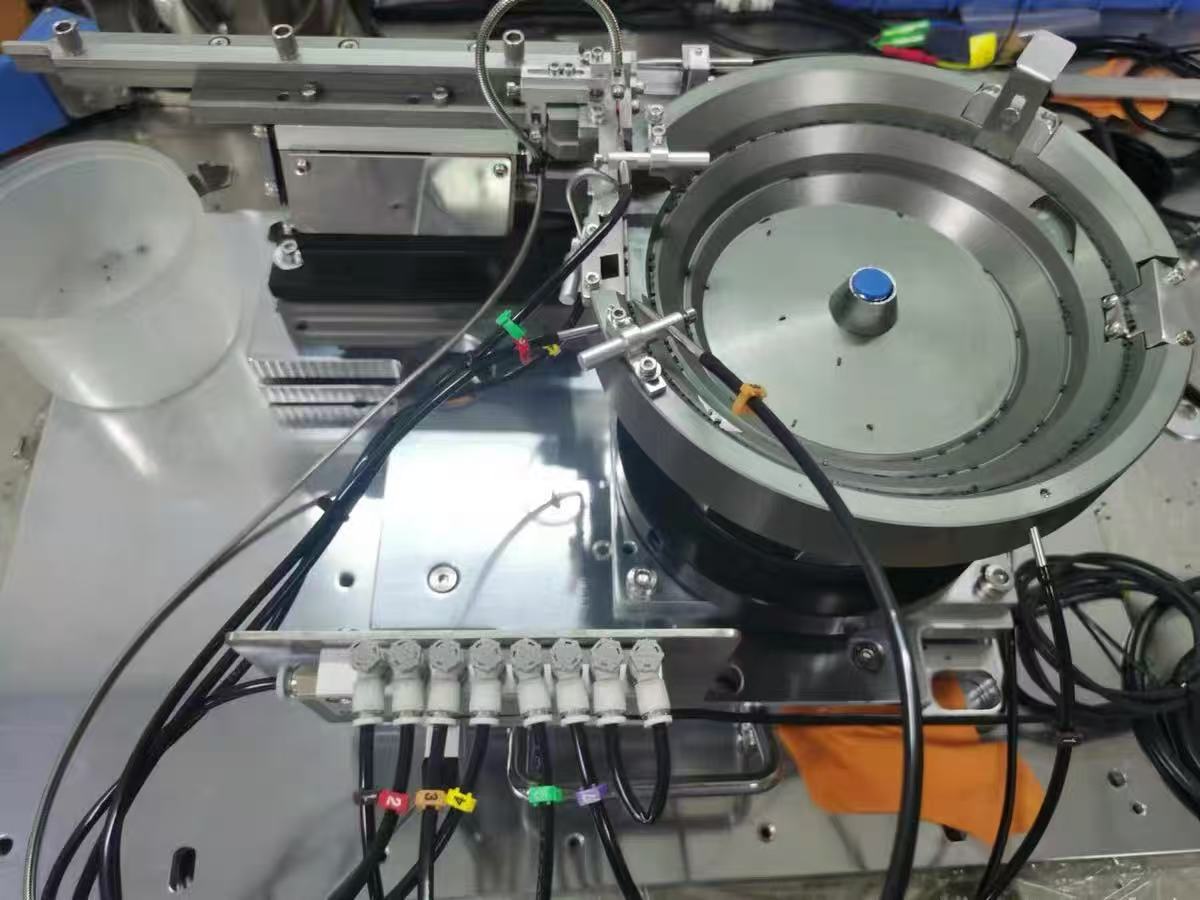
The Power Behind the Shake: Voltage vs. Frequency
The RobotDigg product line offers two distinct ways to control your feeder. While they might look similar, their impact on your workflow is vastly different.
Variable Voltage Controllers (The Analog Classic)
These controllers act like a dimmer switch for your feeder. By adjusting the voltage, you change the amplitude (the "strength") of the vibration.
Best for: Simple setups where the part weight never changes and the feeder is already mechanically "tuned" to your local power grid (50Hz or 60Hz).
The Downside: If your feeder isn't perfectly balanced, voltage-only control can lead to "dead spots" or erratic movement.
Variable Frequency Controllers (The Digital Precision)
These are essentially specialized Variable Frequency Drives (VFDs) for vibration. They allow you to adjust both the voltage and the frequency (Hz).
Why it’s better for Pilot Tests: Every feeder has a "resonant frequency"—the sweet spot where it moves parts with maximum efficiency and minimum power. A frequency controller lets you find that exact spot.
The Silence Factor: Frequency controllers are significantly more silent. By finding the resonant frequency, you eliminate the mechanical "clatter" caused by forcing a feeder to vibrate at a frequency it doesn't like.
Linear vs. Rotary: Building Your Feed Line
A complete vibratory system usually resembles a relay race, where parts are passed from one feeder type to another.
1. The Rotary (Bowl) Feeder: The Organizer
Think of the Rotary Bowl as the "sorter." You dump a handful of bulk parts into the center, and the spiral track uses vibration to move them upward.
Orientation: Through custom "tooling" (mechanical gates), the bowl ensures that only parts facing the correct direction reach the exit.
Use Case: Sorting screws, caps, or electronic components from a scrambled pile into a single-file line.
2. The Linear (Inline) Feeder: The Bridge
The Linear feeder is the "conveyor." It takes the oriented parts from the bowl and moves them in a straight line toward your robot or workstation.
Stability: Because it moves in a straight line, it provides a "buffer" or a queue of parts, ensuring your assembly robot always has a part waiting for it.
Use Case: Transporting parts over a short distance (100mm–500mm) without losing their orientation.
Pilot Test Pro-Tip: Speed vs. Noise
If your goal is to test different feeding speeds, the combination of a Linear Feeder and a Variable Frequency Controller is the gold standard.
Linear Feeders are inherently easier to speed up because the parts aren't fighting centrifugal force or climbing a spiral.
Frequency Controllers allow you to record digital values (e.g., "Set to 55.2 Hz for Component A") making your pilot data repeatable and professional.
For those starting a pilot test with RobotDigg hardware, don't settle for "good enough" vibration. Investing in a Variable Frequency Controller provides the digital overhead needed to find the perfect balance between high-speed throughput and a whisper-quiet factory floor.
Whether you are sorting micro-screws or heavy industrial fasteners, the right control strategy is the key to automation success.
Recent post:
- Which motion platform is right for my build?
- Choosing the Right RC Servo: From Brushed to Brushless
- Master the Motion: Choosing the Right Controller for Your Chinese Servo Sim-Rig
- Choosing the Right Linear Guide for High-End Furniture: OLG vs. MGW Series
- The Complete Guide to RobotDigg PnP Units: From SMT Assembly to Industrial Material Handling