The Complete Guide to RobotDigg PnP Units: From SMT Assembly to Industrial Material Handling
RobotDigg PnP (Pick and Place) head units are versatile modular systems. While most famously used for circuit board assembly, their combination of precision motion and vacuum handling allows them to be adapted for various industrial and lab applications.
Below is an overview of the primary configurations and "other" specialized uses for these units.
1. Surface Mount Technology (SMT) Units
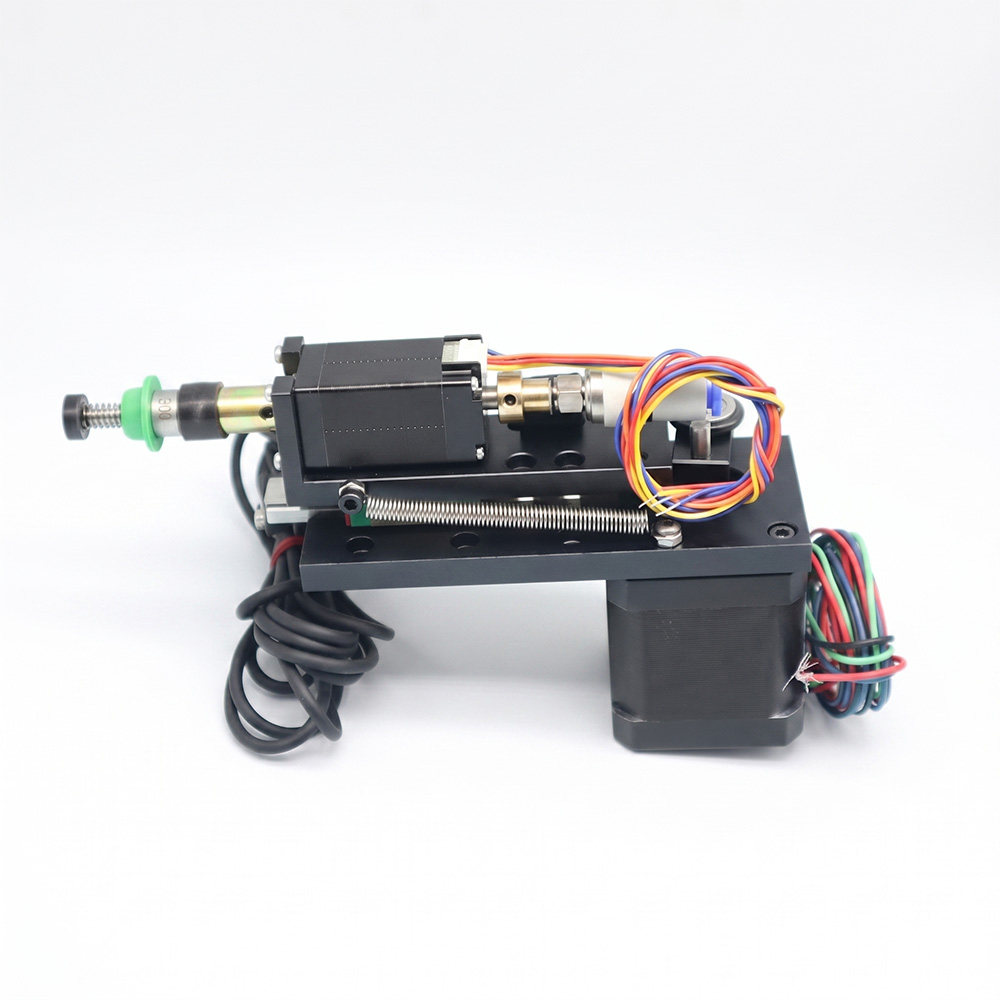
These are the standard units used in electronics production to place components like resistors, capacitors, and ICs onto PCBs.
Configuration: Typically features NEMA 8 or NEMA 11 hollow shaft motors for "C-axis" rotation.
Nozzle System: Designed for Juki nozzles (e.g., 500–508 series). These nozzles have spring-loaded tips to provide a "soft touch," preventing damage to delicate components during placement.
Precision: High-precision linear rails (like MGN9) ensure repeatable accuracy within microns.
2. Suction Cup Units (Transporting & Plating)
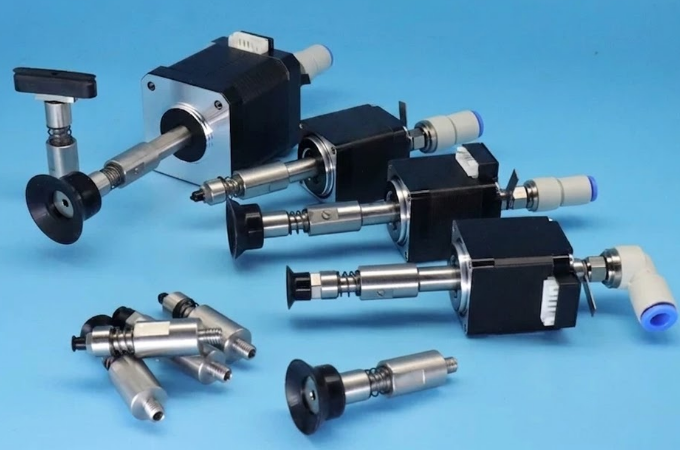
For items larger than a 1206 resistor—such as glass slides, plastic enclosures, or metal plates—the SMT nozzle is replaced with a pneumatic suction cup.
Transporting: Used in automated assembly lines to move items between stations. The head is often fitted with a SMC-type vacuum buffer, which is a spring-loaded rod that allows the suction cup to adapt to slight variations in material height.
Plating & Coating: In chemical or electrolytic plating, these units can "dip" a part into a solution. RobotDigg offers versions with stainless steel or PTFE-coated parts to resist corrosion from plating chemicals.
High-Volume Suction: Unlike the tiny pin-holes in SMT nozzles, these use large-bore pneumatic connectors to handle heavier weights (up to several kilograms depending on vacuum pressure).
3. Other Specialized Options
RobotDigg units are frequently modified for tasks beyond simple vacuum picking:
A. Automatic Dispensing Heads
By replacing the vacuum nozzle with a syringe and a stepper-driven piston, the PnP head becomes a high-precision dispenser.
Applications: Applying solder paste, UV-curable glue, or thermal grease.
Why it's useful: It allows a single machine to both "print" the glue and then "place" the part.
B. Mechanical Grippers
Instead of vacuum, some units are fitted with electric or pneumatic "claws."
Use Case: Picking up non-porous items that vacuum cannot hold (like irregular mechanical gears) or "Form-Fit" parts.
Actuation: Often uses a tiny NEMA 8 stepper with a lead screw to open and close the fingers.
C. Inspection & Laser Heads
The PnP unit can act as a carrier for sensors rather than a picker.
Laser Heads: Mounted with a low-power laser for PCB marking or height sensing.
AOI (Automated Optical Inspection): A high-resolution camera with a macro lens is mounted to the Z-axis to scan for assembly errors.
D. Peristaltic Dosing
For laboratory use, the PnP head can be equipped with a peristaltic pump head. This allows the machine to pick up a pipette tip, move to a vial, and dispense precise microliters of liquid into a multi-well plate (Bio-Printing).
Recent post:
- Leveling Up Recycled Plastic: The 1200mm RobotDigg Mixing Screw
- Which motion platform is right for my build?
- Choosing the Right RC Servo: From Brushed to Brushless
- Master the Motion: Choosing the Right Controller for Your Chinese Servo Sim-Rig
- Choosing the Right Linear Guide for High-End Furniture: OLG vs. MGW Series