Why Fly-knife Rotary Cutters Use Utility Blades as Cutting Tools
Based on the technical specifications from RobotDigg, there are two primary reasons why standard utility knife blades are preferred over specialized industrial blades for the fly-knife rotary cutter:
1. Cost-Efficiency and Practicality
The thickness of a standard utility blade is ideal for the precision required in pipe cutting. Unlike industrial shredders, which require heavy-duty, custom-hardened steel, pipe cutting involves a "sacrificial" tool approach.
Manufacturing Savings: Producing custom blades involves long lead times and high machining costs.
Optimal Thickness: Utility blades provide a clean cut without the "kerf" (material loss) or resistance that thicker specialized blades might cause.
2. High Accessibility and Replacement Cycles
Since the blade is a consumable part (wear item), its availability is critical for maintaining production uptime.
Durability: When cutting high-hardness materials like HDPE (High-Density Polyethylene), a single utility blade typically lasts for 20,000 to 30,000 cuts before requiring replacement.
Ease of Sourcing: Because these blades are a global commodity, manufacturers can replace them instantly without waiting for specialized shipments from a toolmaker.
Blade Installation and Safety Guidelines
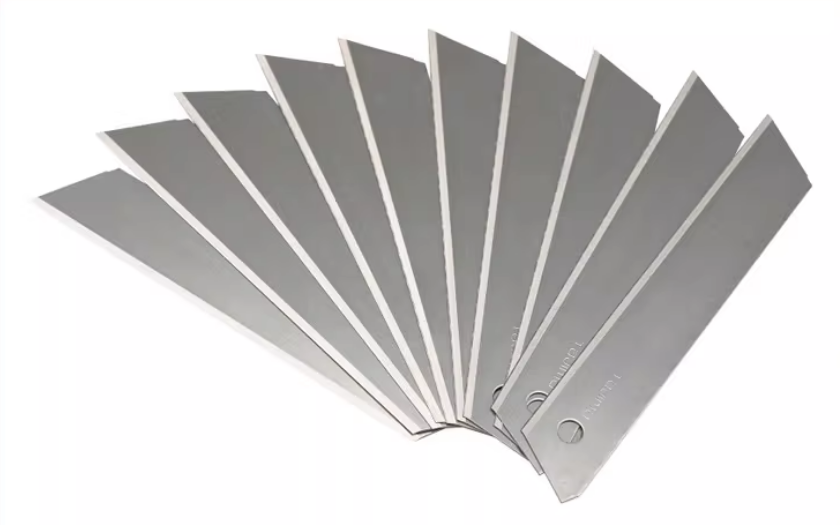
Setting up the blade correctly ensures a clean cut and prevents damage to the machinery. Follow these three key instructions:
1. Guard Against Mechanical Conflict
Clearance Check: When installing the plate that clamps the blade, you must verify that its rotational path does not conflict with or strike the pipe leading tube.
Alignment: Ensure the clamping mechanism is low-profile enough to pass through the cutting zone without interference.
2. Blade Positioning and Selection
Recess Deeply: Position the blade as far inside the clamping mechanism as possible to maximize stability and prevent flexing during high-speed rotation.
Blade Type: It is highly recommended to use utility blades without pre-scored breaking sections.
Note: Blades with "snap-off" segments are prone to shattering under the centrifugal force and impact stress of a fly cutter.
3. Tension and Calibration
Fastening: Ensure the blade is tightened securely; a loose blade can lead to uneven cuts or catastrophic failure.
Home Position: Before starting the operation, manually rotate or software-calibrate the fly knife to its home position (A bit lower than the leading tube) to ensure the timing of the cut is accurate.
Recent post:
- Why Tank-Style Chillers Aren't Always Best for Extrusion Lines
- Revolutionizing Biochip Production: The Seamless Integration of CO2 Foamed PE Cores and Outer Envelopment
- Why Fly-knife Rotary Cutters Use Utility Blades as Cutting Tools
- Deep Dive: Specialized Components of the CO2 Injection System
- Advanced R&D Pilot Line: Bridging Compounding and Film Production