Low-Temperature Cold-Pelletized Recycled Plastic Granules are Not Suitable for Direct Processing
RobotDigg states that "Recycled plastic granules produced by low-temperature cold pelletizing machines (which do not involve heating or dewatering) are not suitable for direct extrusion or injection molding; they require a secondary hot-melt granulation (re-extrusion) process before they can be used for extrusion, injection molding, or blown film."
This is accurate for the specific type of machine you described.
Understanding the "Low-Temperature Cold Pelletizing" Machine
In the recycling context, a machine that performs "low-temperature cold pelletizing without heating or dewatering" is not a traditional extruder. It refers to a Plastic Agglomerator or Compactor.
The process is one of pre-treatment and densification, not true final purification:
Mechanism: It uses friction heat generated by high-speed rotating blades to heat the plastic (like film or fiber) just to its softening point—not its full melting point.
Product: The material forms irregular, high-density agglomerates or clumps (the "granules").
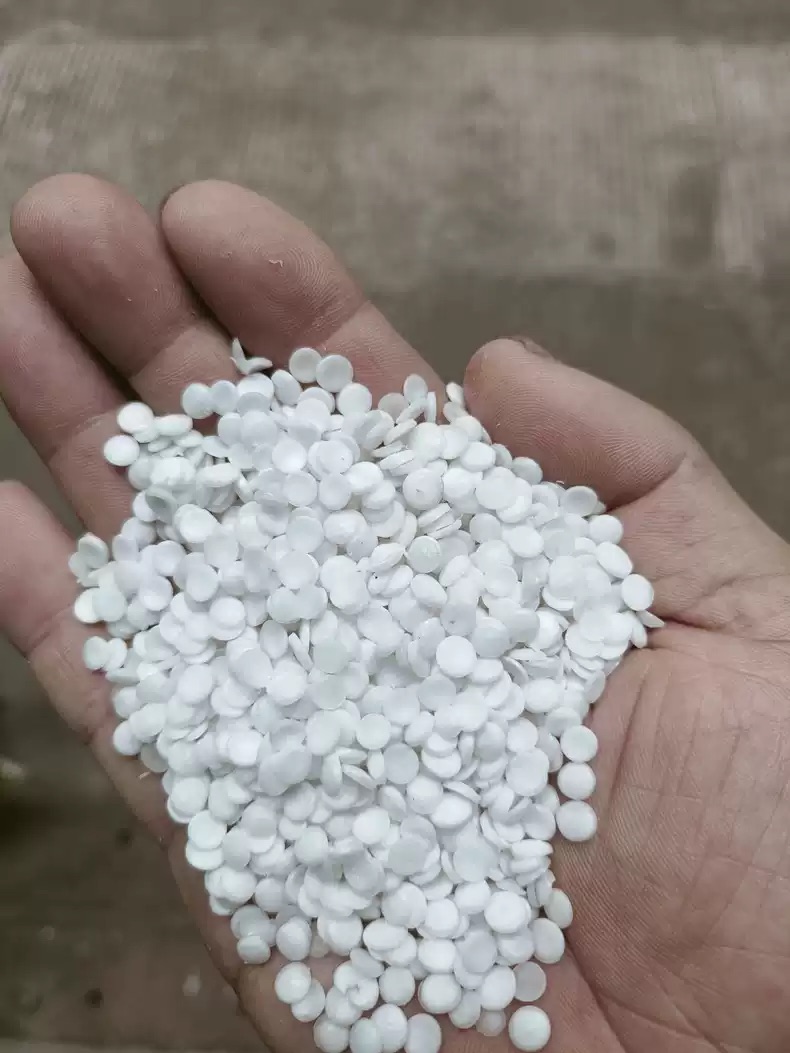
(RobotDigg has a client from Australia sending us pellet or granules out of Low-Temperature Cold Pelletizing recycled plastic)
Why the Granules Cannot Be Used Directly
The clumps from an agglomerator are insufficient for final manufacturing processes (like extrusion, injection molding, or blown film) for three main reasons:
Lack of Purification & Filtering: Since the plastic was only softened, not fully melted, it was never forced through a filter screen. All contaminants (dirt, metals, residual paper, and non-melted foreign plastics) remain trapped inside the clumps. Direct use would cause blockages and product defects (e.g., black spots, holes).
Moisture and Volatile Residue: Since there is no proper melting or vacuum de-gassing (de-airing), any residual moisture or volatile organic compounds (VOCs) from washing or packaging are trapped. These would vaporize in the high-heat of the final processing machine, causing severe defects like air bubbles, voids, or silver streaks in the finished product.
Inconsistent Material Quality: The material has not been subjected to the high shear and mixing of an extruder screw. Its molecular structure and melt viscosity are non-uniform, which is disastrous for processes like blown film, which require extremely stable and consistent melt strength.
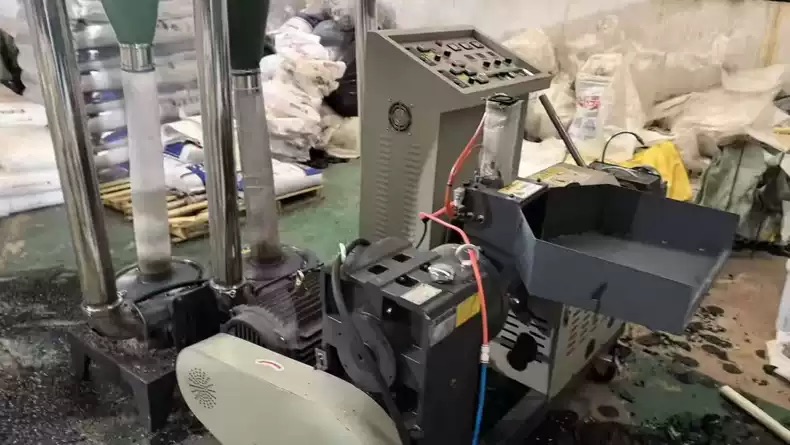
The Necessity of Secondary Hot-Melt Granulation
The agglomerated clumps must be fed into a Secondary Hot-Melt Granulation Line (a high-performance extruder with filtration and de-gassing) to:
Melt and Filter: Fully melt the material and remove all solid contaminants.
De-gas and Dry: Use a vacuum system to remove moisture and volatiles.
Homogenize: Shear and mix the polymer chains to ensure consistent quality and color.
Final Cut: Produce uniform, high-quality pellets suitable for molding machines.
Recent post:
- Whirlwind Milling vs. CNC Milling for Screw Manufacturing and the Cost Implications for Different Screw Types
- The relationship between three common closed-loop modes and FOC control
- Transforming Waste into Value: The Powerhouse Machines of the Plastic Industry
- A Tale of Two Films: Calendering vs. Casting
- The Future of Motion Control: Integrated Linear and Rotary Actuators