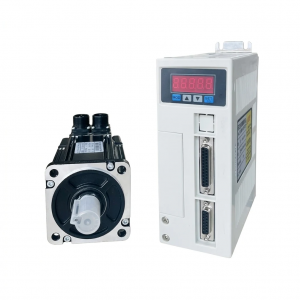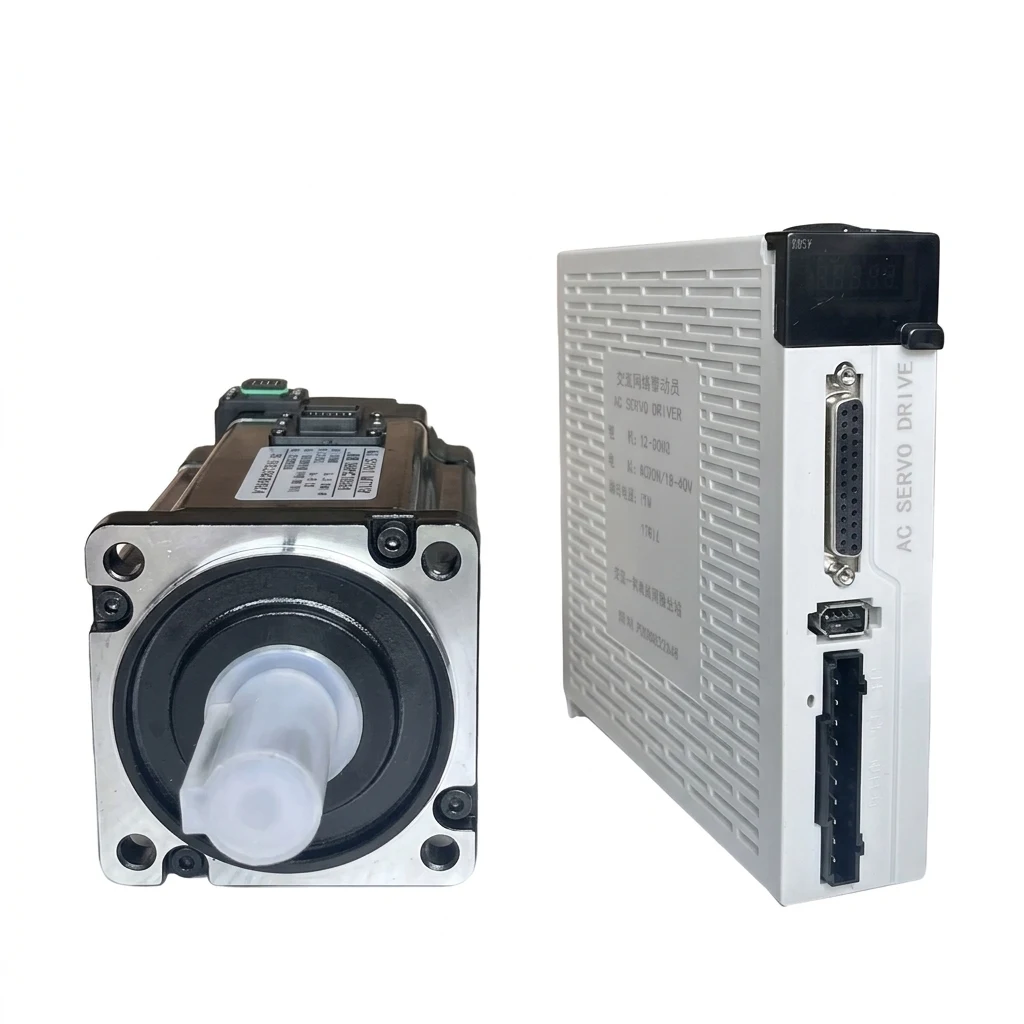
80SV paired with an SV/S2-compatible driver
Detailed Breakdown
1. AASD 80ST-M02430 (The Classic Standard)
The "ST" designation: Refers to standard sinusoidal-drive motors with an optical encoder.
Pros: Highly predictable optical signal with zero drift, vast community documentation, pre-configured Mach3/LinuxCNC and OSW files.
Cons: High-pitched audible motor whine when holding position; optical disc can shatter or misalign if subjected to direct physical shock (common in aggressive tactile motion rigs).
2. A2M 80SV02430 (The Transition Variant)
The "SV" designation: Marks the shift to magnetic encoder architecture.
Pros: Immune to physical vibration and shock damage; lower manufacturing cost; identical mounting footprint (19 mm shaft, 80 mm flange, 70 mm pilot).
Cons: Firmware parameter compatibility must match the magnetic encoder protocol; legacy AASD-15A drives with older firmware (optical-only) cannot read the magnetic serial stream without errors (e.g., Err-9 or Err-10).
3. S2 80SV02430 (The Current Refined Kit)
The "S2" designation: Denotes the S2-SVD15 driver paired directly with the 80SV magnetic motor.
Pros:
Better current loop tuning and optimized PWM frequency eliminate the loudest audible holding whine.
Slimmer footprint saves enclosure space.
Native magnetic encoder decoding with lower latency.
Cons: CN1 pin assignment can have slight pin-offset variations depending on the OEM board revision compared to the original blue AASD-15A manual.